

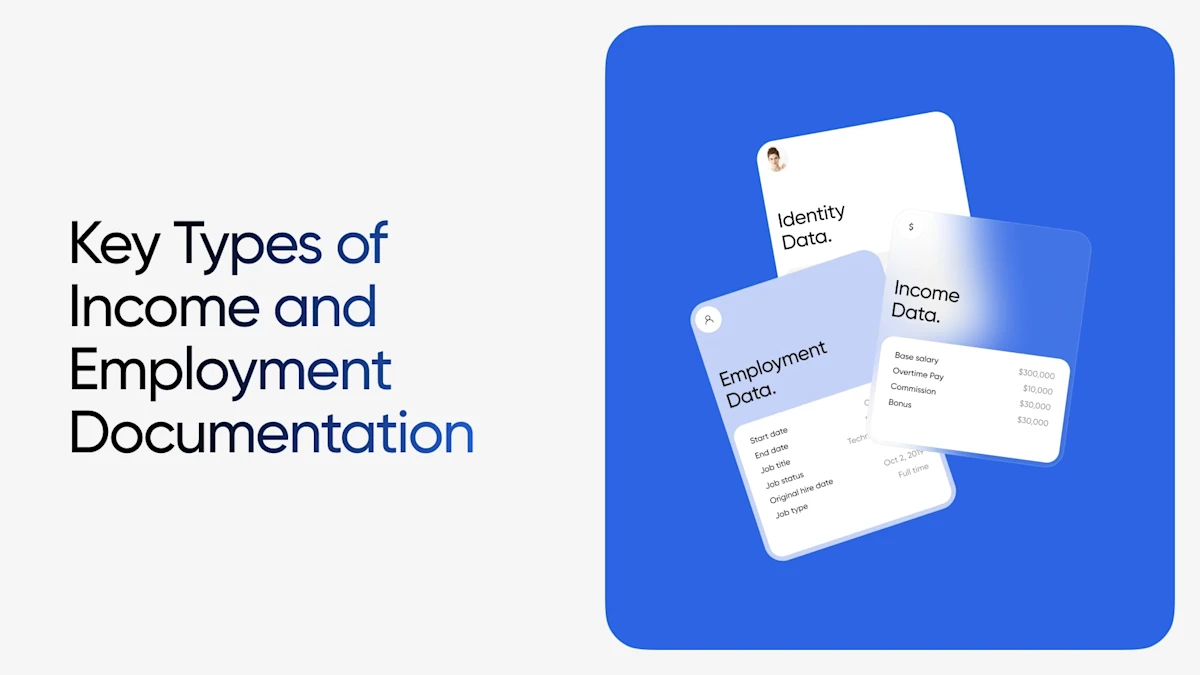
Before approving your mortgage application, a lender needs to know you can afford to make monthly payments. Employment verification reduces a lender’s risk by confirming your employment status, while income verification helps calculate your earnings and determine whether it’s enough to support monthly mortgage payments.
The lender may request a verification letter from your employer as part of the application process. They may also ask for pay stubs, bank statements, tax returns and other supporting documents.
Keep reading to learn more about the income and employment documentation required during the mortgage process.
What Is Income and Employment Documentation?
Banks, landlords and other entities use income and employment documentation to assess risk. If you’re applying for a mortgage, this documentation helps the lender ensure you have the means to repay a home loan. Landlords use income and employment documentation to determine if you could be a responsible tenant.
Providing this documentation helps establish your credibility as a borrower or a renter. Lenders and landlords want to work with individuals who have a steady source of income and a history of on-time payments. Collecting income and employment documentation makes it easier to identify responsible applicants and avoid defaulted loans or unpaid rent.
Employers, financial institutions and government agencies all play a vital role in the verification process. Your employer may have to provide a letter confirming your employment status, job title and other data, making it easier for lenders and landlords to confirm you have steady employment.
Financial institutions prepare bank statements and other documents to help verify your income. Government agencies, including the Internal Revenue Service and state tax agencies, provide tax returns and other documents.
Common Types of Income Documentation
Lenders typically ask for the following documents during the verification of income and employment (VOIE) process:
- Pay stubs: Pay stubs show regular earnings, deductions and tax contributions, making them the most common type of income documentation.
- Tax returns: Your tax return shows your gross income, gross adjusted income and taxable income, making it an essential source of information for lenders and landlords. You may also have to provide copies of your 1099 forms if you’re self-employed.
- Bank statements: If you have irregular income, your bank statements can help a lender get a clearer picture of your earnings over time.
- W-2 forms: Every year, your employer must send you a W-2 form, summarizing your annual earnings and tax contributions.
Common Types of Employment Documentation
When lenders perform employee verifications, they usually request the following documents:
- Employment verification letters: A verification letter confirms your job title, salary and employment duration.
- Job offer letters: If you recently started a new job, the offer letter can help your lender verify your current employment status.
- Work contracts: Freelancers use work contracts to show their job scope and income. A work agreement also confirms the duration of your contract with a client.
- Employment history reports: These reports provide a comprehensive summary of your current and past employment.
How Digital Tools Simplify Income and Employment Documentation
Digital platforms simplify the income and employment verification process, as they prevent delays and increase accuracy. Instead of collecting hard copies of required documents, you can receive digital versions, making the process as seamless as possible.
Each platform has features designed to prevent unauthorized access to your confidential data. Overall, digital verification makes required documents more accessible without compromising your privacy.
Lenders have embraced digitization because it helps reduce the risk of fraud, speeds up the verification process and is cost-effective.
How Truv Simplifies Income and Employment Verification
Truv income and employment verification is different from traditional methods. With the Truv platform, lenders can gather consumer-permissioned data in a fraction of the time. Our broad network connects with 2.3+ million employers and counting, offering fast, reliable verification.
Truv also connects directly with payroll providers, reducing the manual effort required to verify your income and employment. Our network includes:
- Gig platforms, such as Etsy, DoorDash, Uber Eats, Lyft and more
- Self-employed individuals
- Benefits and/or retirement recipients
- Fortune 1000 companies
- Federal government agencies
- Retailers
- Health care providers
- Food service industry
- Military
- Private companies
- NASDAQ-listed companies
This wide-ranging coverage ensures you can easily authenticate your income, regardless of your employment type.
Getting approved for a mortgage or rental property should be easy. Truv makes the verification process simple for borrowers and lenders, eliminating delays that can cost you money.
Learn more about Truv’s story here.
FAQs About Employment Verification
The answers to the following questions can help you learn more about the employment verification process.
What is an employment verification?
Employment verification is a process used by mortgage companies to assess your financial stability. If you have a history of steady employment, you may be less likely to default on your home loan, making employment verification an essential risk management tool for lenders.
During an employment verification, your lender may contact your employer or ask to see pay stubs, tax returns and other documents to help prove where your income comes from.
Do employers verify job titles?
Yes, employers verify job titles when contacted by mortgage lenders. It’s important to be truthful on your mortgage application so your employer’s response aligns with the information you gave your loan officer.
What are examples of income verification?
Common income verification examples include pay stubs, bank statements, W-2 forms and 1099 forms.
What is legitimate proof of income?
Legitimate proof of income is a set of documents used to verify the source of your income and annual earnings. Examples include pay stubs, tax returns, bank statements and profit and loss statements.


