

Whether you’re seeking employment verification for a home loan or need to prove your income to rent an apartment, a verification letter is a common form of documentation used in the process.
This guide covers employment verification’s meaning and helps you understand how a verification letter plays a role in the process. It also provides tips for securing or writing a verification letter.
What Is an Employment Verification Letter?
The income and employment verification process involves numerous data and document requests. Verification letters, a common document, demonstrate current or past employment and may come from a hiring manager, human resources personnel or yourself.
These processes, which can support your application for a mortgage or lease, require accurate data. The information in an employment verification letter must be correct and up-to-date to help avoid delays in the application process.
Why You Might Need an Employment Verification Letter
Some common reasons for employment verification documents include:
- Applying for an auto loan, mortgage or personal loan: Lenders often want proof of current employment, as this helps demonstrate you have an income to pay back what you borrow. They may also want verification of your current employment’s duration or previous positions to understand your income’s stability. This data helps lenders make data-backed decisions about risks.
- Renting an apartment: Landlords usually want to know you’re employed for the same reasons. Your current job status and monthly earnings are critical deciding factors in whether someone chooses you as a tenant.
- Completing background checks for new jobs: In some cases, potential employers request employment verification to confirm the credentials on your resume. This helps them understand your background and work history and whether you may be a good fit for their position.
Essential Information to Include in an Employment Verification Letter
The information necessary for an employment verification letter depends on what you need it for. At a minimum, the letter should include your name, the job title and the dates of employment.
Basic Employment Verification Letter
A basic letter confirms that you worked for a company. This may be all you need to back up your resume claims. It might also be sufficient documentation for a landlord if you’ve also proven your income stability with W-2s or paycheck stubs.
A simple employment verification letter might include verbiage such as, “This letter confirms that Joe Smith worked for ABC Corporation as a project manager from June 2019 through February 2024.”
Detailed Verification Letters
When applying for a loan or other credit, financial institutions may want detailed verification letters. In these cases, consider including your salary in the letter to support income claims.
You might also need a more detailed verification letter if you’re a freelancer or self-employed. For example, a freelancer might need to create an employment verification letter that lists current contracts and associated income.
Top Tips for Writing a Strong Employment Verification Letter
Whether you’re writing your employment verifications or seeking them from employers, the following tips can help ensure a positive outcome.
- Ensure the letter is easy to understand and scannable. Only include pertinent details and ensure they’re presented in an easy-to-read manner. Tables and lists can be helpful. Avoid including unnecessary information that may confuse the reader or require further explanation, as these can create delays in processing your application.
- Double-check all information. Always double-check the information presented in an employment verification letter. Look at the dates, job titles and salary figures to spot typos or mistakes. If the employment letter doesn’t align with your application claims, be prepared to explain why.
- Keep copies for future reference. Keep copies of all verification letters so you can reference them later. You might also be able to use them in future application processes.
- Seek letters from multiple sources when appropriate. Freelancers and contractors may need to get reference letters from multiple clients to verify claims about work on previous projects.
Digital Solutions to Complement Your Letter
When possible, streamline the verification process with digital tools. You can use AI tools, such as Grammarly and ChatGPT, to help you write letters. However, don’t rely too much on AI, as a document entirely written by AI could have inaccuracies.
You can also use tools such as Truv employment verification. Truv gets data by connecting directly to the source, including payroll providers and financial institutions, so you don’t have to wait for an HR office to write and send a verification letter. API-based connections to payroll systems help you expedite income and employment verification without the manual processes involved in letter writing or document chasing.
FAQs About Employment Verification Letters
The answers to the following commonly asked questions can provide more insight into employment verification letters.
Can I write my proof of employment letter?
It depends on your situation. If you’re self-employed, you may need to gather the data and create your own verification of employment or income letters. Be prepared to back up any claims with additional documents, such as check stubs, bank statements or tax forms. To streamline the process, check with your lender, first, to see if a consumer-permissioned employment tool like Truv is offered.
What is an example of a letter to confirm employment?
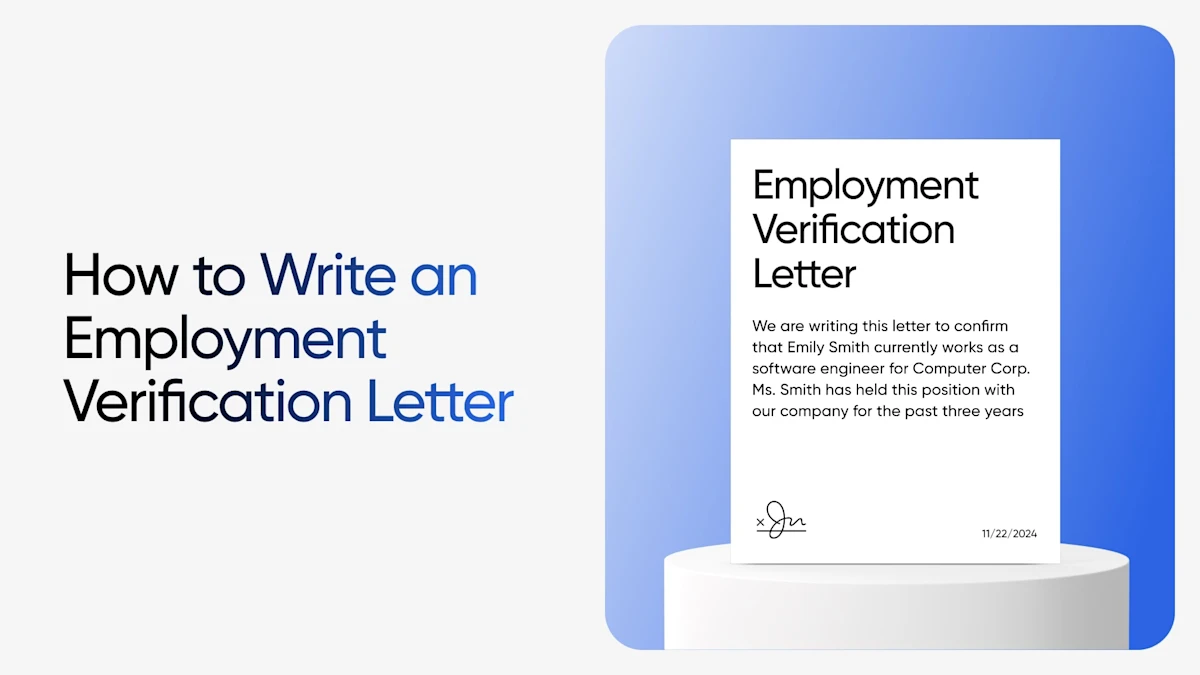
Here’s another example of body content for a letter to confirm employment:
“We are writing this letter to confirm that Emily Smith currently works as a software engineer for Computer Corp. Ms. Smith has held this position with our company for the past three years.”


