

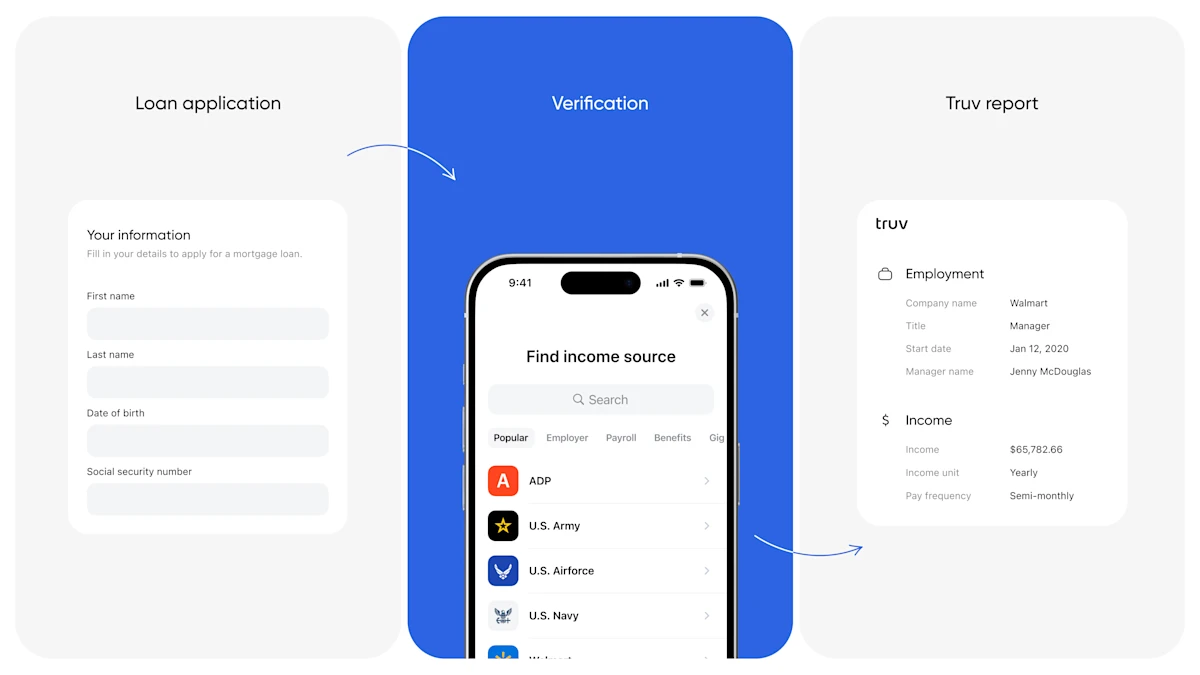
When you apply for a mortgage, part of the application process is verification of employment, which helps lenders verify you have a stable job history. If you have a steady job, you’re more likely to repay a loan as agreed, so the process helps lenders manage risk and avoid making poor decisions. Learn more about employment verification for a home loan before applying for a mortgage.
What Is Employment Verification?
Employment verification helps a lender confirm you have a steady job. Lenders need to know about your job history to make decisions about home loans. An applicant with a stable job is less likely to default on their mortgage payments, so employment verification is an essential risk-management tool.
Manual verification relies on the collection of employment information. For example, your lender may contact your HR department by telephone or email.
Automatic verification uses digital tools to verify the information you’ve provided. The automatic version generally takes less time than the manual version and is also less prone to fraud.
When it’s time for verification of employment, your lender should ask you to provide these documents:
- Pay stubs
- Tax returns
- Employment verification letters
- Other documents needed to confirm your employment history
The process may have variations based on your location. For example, employment verification in California differs from other states due to strong privacy laws.
The Step-by-Step Process of Employment Verification
To prepare for verification of employment, follow these steps.
Step 1: Check for Consumer-Permissioned Verification Tools
Depending on your circumstances, you may qualify for employment verification with consumer-permissioned services, such as Truv. Automatic verification is convenient, as it allows lenders to instantly verify your employment. When you use consumer-permissioned services, you don’t have to provide copies of employment-related documents or wait for your employer to respond to a verification request.
Truv is more than an employment verification website. It’s a robust platform that allows borrowers to securely share their information, streamlining the verification process. Truv even works for federal employment verification.
Step 2: Prepare the Necessary Documents
If your lender doesn’t offer consumer-permissioned verifications, collecting the necessary documents beforehand makes it easier to comply with your lender’s requests. Before applying for a mortgage, gather your pay stubs, tax returns and other required documents. Keep them together to ensure you don’t lose anything important.
Step 3: Contact Your Employer for Verification
If your employer doesn’t work with Truv or any consumer-permissioned services, you have to go through manual verification. How this process works depends on your employer’s policies.
In many cases, an HR representative responds to the request by writing a verification letter or answering questions via telephone. Some employers outsource this task to third-party employment verification companies.
Your lender will contact your employer during the application process and again shortly before you close on your new home. Lenders perform a second verification of employment to ensure nothing has changed since you applied for a mortgage.
Step 4: Allow the Lender to Verify Your Income
During the employment verification process, your lender will ask questions about your income. Stable income is essential for loan approval, as it indicates you have a fairly predictable amount of money coming in every month. A steady income makes it easier to repay your home loan.
Total income is important, but lenders also review the consistency of your income. If you earn $10,000 one month and $1,000 the next, a lender may have concerns about your ability to make monthly mortgage payments. Your lender will verify consistency by reviewing at least two years’ worth of pay stubs, tax returns and other documents.
It’s essential to provide accurate information during this process. If a lender can’t verify the income you listed in your mortgage application, your file could be flagged for fraud, making it more difficult to purchase a home.
Handling Self-Employment or Freelance Work
If you’re self-employed, the manual and traditional verification process is more complex, as you don’t have an employer to write a verification letter or answer questions about your employment status. You may need to provide extra documentation to help your lender determine if you have the means to make monthly mortgage payments.
However, Truv simplifies this process by covering 96% of the U.S. workforce, with connections to over 2.3 million employers across diverse industries, including gig platforms, self-employed careers, food service, retail and more. Truv’s dynamic platform enables quick, seamless verifications, offering a comprehensive solution that includes verification for gig workers and benefits recipients.
FAQs About Truv’s Income Verification
Get answers to the most commonly asked questions about Truv’s verification of income and employment (VOIE) service.
What is used to verify employment?
Truv uses payroll data, pay stubs, tax returns, W-2s and bank statements to verify your employment status and monthly income, depending on the information requested by the lender.
How do I ask for employment verification?
If your employer doesn’t work with Truv or another consumer-permissioned vendor, you can ask an HR representative to write a verification letter or speak with a loan underwriter by phone.
Some companies use third-party verification services. If your employer is one of them, ask your HR representative for the third party’s contact information.
How do I create verification of employment?
If you’re self-employed, you may have to create several documents to help your lender verify your status. To create a profit-and-loss statement, add up your monthly revenue and expenses. Then, subtract your total expenses from your total revenue to determine your net profit or loss for the month.
Your lender may also accept pay stubs showing you pay yourself regularly. Alternatively, you can provide 1099 forms, tax returns and other documents.


