

Over the last couple years, mortgage lenders have been turning to consumer-permissioned verification solutions to streamline operations, improve efficiency, save up to 80% on costs compared to legacy verification providers, and enhance the borrower experience. According to mortgage industry experts, many lenders face hurdles with implementation of new technology, including consumer-permissioned verification of income and employment, not because of technological or resource limitations but because of resistance to changing established workflows. Discover why thoughtful change management is key to success.
Why Change Management Matters
Loan officers are accustomed to existing verification processes, and from their point of view, any disruption to these processes could potentially impact their reputation and business. As Femi Ayi, EVP of Operations at Revolution Mortgage explained in Truv’s Webinar: Strategies to Maximize the Power of Day 1 Certainty, “Every one of these loan officers is so tied to only being as good as their last deal. If you have a negative experience, it can really impact your reputation and your ability to solicit deals. That’s where people are resistant to change.”
Because consumer-permissioned verifications introduce a borrower-driven process into loan officer workflows, requiring the borrower to log into their payroll provider and/or financial institution via Truv in lieu of paperwork or pulling reports from legacy verification providers, the transition from a document-centric approach to a data-centric one requires a significant shift in mindset from the top down.
Moving from Documents to Data
A fundamental aspect of this transition is the conceptual shift from collecting documents to accessing data directly from the source. Femi highlighted, “Mortgage companies really need to move from document companies to data companies. We’re collecting the documents so that we have a record of the data and can go back to it later. If we can get the data from an immutable source, we have the data.”
With consumer-permissioned verifications, Revolution Mortgage has experienced a range of value-adds, despite the process involving borrower action: Faster processing times, reduced operational costs, improved data accuracy, enhanced borrower experience, higher percentage of loans receiving rep and warrant relief, and reduced post-closing quality control issues. Realizing the benefits requires thoughtful change management procedures to ensure all parties involved in the loan origination process are aligned with the value of digital verifications.
Effective Change Management Strategies
1. Secure Executive Sponsorship
Successful implementation requires strong leadership from the top. Designate an empowered change agent who can drive the initiative forward and overcome resistance. This individual should have the authority to establish new processes and hold team members accountable for following them.
Hear what Truv’s Head of Marketing, Richard Grieser, has learned about Truv customer experiences with change management:
2. Focus on Training
Training sessions, educational campaigns and widespread organizational awareness are critical to successful adoption. Ensure loan officers, processors, and underwriters understand not just how to use the new tools but why they’re valuable. This includes training on:
- How to explain the process to borrowers
- How to interpret verification results
- How to troubleshoot various borrower scenarios
Hear one of Truv’s customers, Femi Ayi, EVP of Operations Intelligence & Solutions at Revolution Mortgage, share his thoughts about change management:
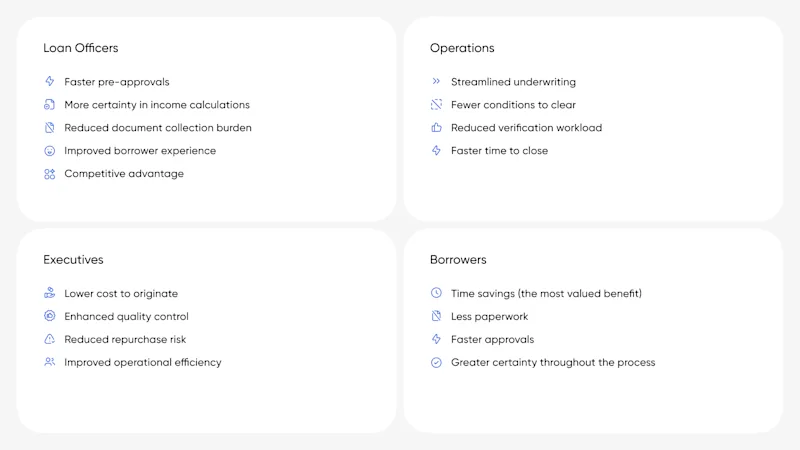
3. Clearly Communicate Benefits to All Stakeholders
Depending on the stakeholder, the value of Truv varies. It’s important to educate the benefits of consumer-permissioned verification accordingly.
4. Address Security Concerns Proactively
Sharing sensitive financial and employment data may be cause for concern for some borrowers. Understanding how Truv’s consumer-permissioned platform safeguards borrower data and is often more secure than traditional document collection methods is critical.
Hear Brooke Smith, Senior Manager, Loan Sourcing Digital Solutions at Fannie Mae, share insight into borrowers using consumer-permissioned verification solutions:
Truv takes the following steps to safeguard borrower data:
- Encryption: Truv uses the Advanced Encryption Standard (AES-256) and Transport Layer Security (TLS) to prevent unauthorized access to your personal information.
- Robust monitoring: Truv uses intrusion-detection software to block unauthorized access to its network.
- Compliance: As a licensed credit reporting agency, Truv meets all standards outlined in the Fair Credit Reporting Act. We also comply with the SOC II framework.
- Independent testing: Truv has financial institutions and researchers conduct regular audits of our security measures.
5. Create Process Guardrails
Truv’s clients often establish clear processes for when and how verification services should be used, mandated from the top down. With a clearly defined verification waterfall, LOs are instructed to follow the procedural steps, ensuring consumer-permissioned verification is used first, rather than being optional or used “when convenient.” The Truv team works with our clients to set expectations and metrics for adoption, available to regularly review progress and provide helpful guidance along the way.
6. Demonstrate Early Wins
Track and share success examples where verification services have provided tangible benefits:
- Time saved in the origination process
- Reduced conditions to clear
- Elimination of post-closing QC issues
- Saving on loan files
- Borrower satisfaction
- Percentage of loans receiving rep and warrant relief
Conclusion
By focusing on clear communication, comprehensive training, and process integration, lenders can overcome resistance to change and fully leverage the power of direct-source data verifications. The industry’s transition from document-centric to data-centric mortgage origination is paving the way for a better lending experience for both lending teams and borrowers.


