

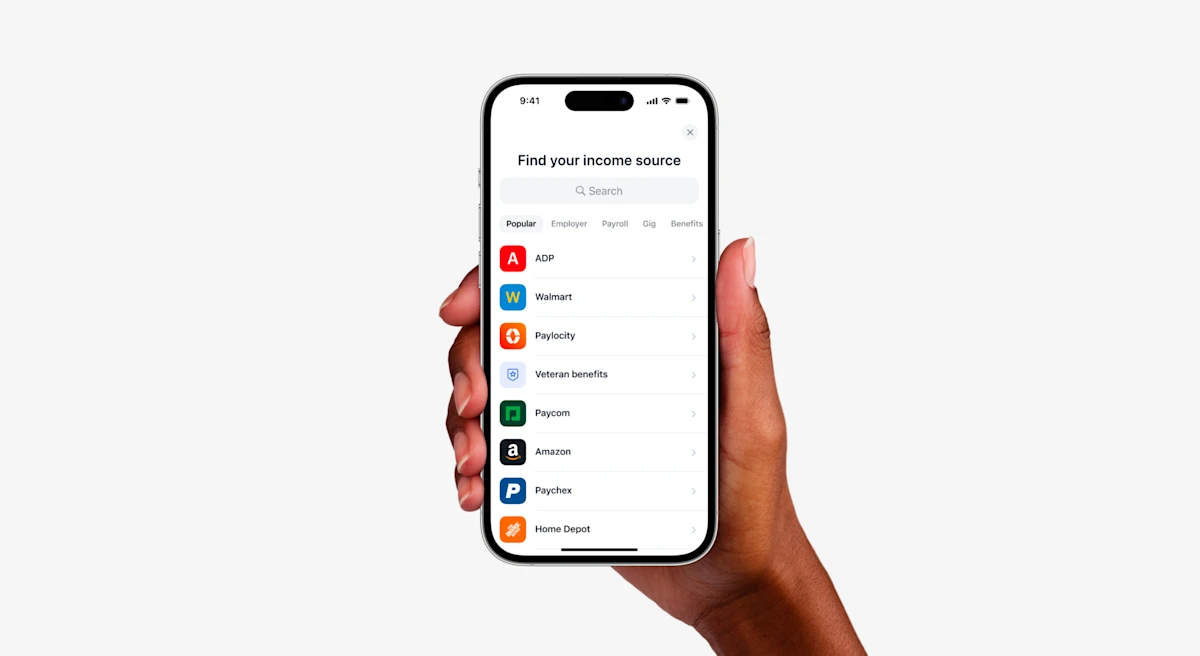
Income verification for mortgages is one of the most important steps in the underwriting process. Before approving a home loan, lenders need to confirm that borrowers have sufficient and stable income to repay their mortgage.
Whether a borrower is a salaried employee, self-employed business owner, contractor, or gig worker, lenders must verify income and employment before issuing a final mortgage loan approval.
In this guide, we’ll explain how mortgage income verification works, which documents lenders require, common challenges lenders face, and how modern verification technology helps accelerate mortgage approvals.
What Is Income Verification (VOIE) for a Mortgage?
Mortgage income verification is the process lenders use to confirm a borrower’s income before approving the financing for a home loan.
Income verification helps lenders:
- Assess repayment ability
- Calculate debt-to-income ratios
- Meet agency (Fannie Mae, Freddie Mac) and investor requirements
- Reduce fraud risk
- Improve underwriting accuracy
Income verification is required for nearly every mortgage transaction, including conventional, FHA, VA, and jumbo loans.
What Is Verification of Employment (VOE) for a Mortgage
Verification of employment (VOE) is the process lenders use to confirm that a borrower is currently employed and earning the income reported on their loan application. This goes hand in hand with verifying income.
A VOE typically confirms:
- Current employment status (and sometimes prior employment)
- Job title and start date
- Income, including base pay plus any bonuses, commissions, or overtime
- Likelihood of continued employment
Lenders generally verify employment in one of three ways:
- Written VOE: the employer completes a standardized form (such as Fannie Mae Form 1005) detailing the borrower’s employment and income.
- Verbal VOE: the lender contacts the employer directly, usually shortly before closing, to confirm the borrower is still employed.
- Automated/electronic/instant VOE: the lender retrieves verified employment and income data instantly through a third-party database.
For most loans, employment is verified at least twice: once during underwriting and again within a few days of closing to confirm nothing has changed.
What Is Asset Verification (VOA) for a Mortgage?
In addition to income and employment verification, Truv offers asset verification (VOA) for lenders to use and confirm the funds a borrower holds, checking, savings, investment, and retirement accounts. This helps lenders make sure there’s enough money to cover the down payment, closing costs, and required reserves.
VOA typically confirms:
- Account ownership and current/available balances
- Average balances over time (often 30- and 60-day)
- The source of large or recent deposits
- Whether funds are “sourced and seasoned” — meaning they’ve been in the account long enough and come from a traceable, acceptable source
Why Lenders Verify Assets
Lenders verify assets to confirm borrowers can actually fund the transaction and weather a financial setback after closing.
- Down payment and closing costs: confirms the borrower has the cash needed to close.
- Reserve requirements: many loan programs require a set number of months of mortgage payments held in reserve after closing.
- Sourcing large deposits: unexplained or recent large deposits must be documented to rule out undisclosed loans or ineligible funds.
- Agency and investor requirements: Fannie Mae, Freddie Mac, FHA, and VA all require asset documentation as part of underwriting.
How Direct-to-Source Asset Verification Works
Traditionally, asset verification meant collecting 60+ days of bank statements, then manually reviewing each one to confirm balances and source deposits — slow for borrowers and underwriters alike.
Direct-to-source (consumer-permissioned) verification replaces that. With the borrower’s authorization, the lender connects directly to their financial institutions through a secure OAuth connection and pulls verified account data in real time, meaning no statements to gather, upload, or chase down.
Truv’s asset verification supports direct connections to 14,000+ banks, with borrowers connecting their accounts in under a minute on average and reports returned instantly. Each report includes current and available balances, 30- and 60-day average balances, and transaction flagging for direct deposits, recurring payments, and large transactions. Reports are configurable — up to two years of history, with custom thresholds for large deposits and withdrawals — and are GSE-ready for Fannie Mae and Freddie Mac, with on-demand refreshes for pre-closing reverification.
Why Mortgage Lenders Verify Income and Employment
Mortgage lenders verify income and employment to ensure borrowers have reliable earnings and meet underwriting requirements.
Ability-to-Repay Requirements
Income verification supports compliance with federal ability-to-repay regulations.
Debt-to-Income Calculations
Verified income allows lenders to accurately calculate debt-to-income ratios.
Agency and Investor Requirements
Fannie Mae, Freddie Mac, FHA, and investors require income documentation as part of the underwriting process.
Fraud Prevention
Verification helps lenders confirm that income information is accurate and current.
How Employment and Income Verification for a Mortgage Works
Step 1: Borrower Submits an Application
Borrowers provide employment information and income details. This is often collected at the time of application.
Step 2: Income Documents Are Collected
Common documents include:
- Pay stubs
- W-2s
- Tax returns
- Bank statements
- 1099 forms
- Social Security statements
Step 3: Employment Is Verified
Lenders verify current employment through:
- VOE forms
- Employer outreach
- Direct-to-payroll verification
- Instant databases
Step 4: Underwriting Reviews Income
Underwriters determine income stability and qualifying amounts.
Step 5: Employment Is Reverified Before Closing
Many lenders perform a final verification shortly before funding, often referred to as 10-day pre-closing employment re-verification.
Common Documents Needed for Mortgage Income and Employment Verification
| Borrower Type | Common Documents |
|---|---|
| W-2 Employee | Pay stubs, W-2s |
| Self-employed | Tax returns, P&L statements |
| 1099 Contractor | 1099 forms, bank statements |
| Rental Property Owner | Tax returns, lease agreements |
| Retiree | Pension and Social Security statements |
| Investor | Brokerage statements |
| All borrowers (assets) | Bank statements, brokerage/retirement statements |
Types of Income Mortgage Lenders Can Verify
Salary and Wages
Base pay from traditional employment is generally the easiest income to verify.
Bonuses and Overtime
Lenders review historical earnings to determine consistency.
Commission Income
Commission income may require additional documentation.
Self-Employment Income
Business owners typically need multiple years of tax returns.
Rental Income
Lease agreements and tax returns are commonly reviewed.
Retirement Income
Social Security, pension income, and distributions may qualify.
Investment Income
Interest and dividend income may supplement qualifying income.
Gig Worker Income
Income from multiple sources often requires additional analysis.
Different Types of Employment and Income Verification for Mortgages
Depending on the lender, manual, instant, or consumer-permissioned income verification processes may be a part of the journey to closing.
Manual Verification
Manual verification involves reviewing physical or digital copies of your W-2s, tax returns, pay stubs and other documents. Your lender may even contact employers or taxing authorities to verify the information you provide.
This type of verification is most beneficial for self-employed individuals, as it allows for a personal review of your documents and a direct resolution to any problems that arise. However, manual verification is time-consuming and susceptible to human error.
Historically, lenders have relied on these methods:
- Pay stubs
- W-2s
- Tax returns
- VOE forms
- Employer phone calls
These methods are effective but often create:
- Longer cycle times
- Borrower friction
- Higher operational costs
Instant Verification
Instant verification uses specialized software to analyze and verify income-related documents. Lenders use a variety of databases to cross-reference the information you submit with official records.
It’s much faster than manual verification, and it reduces the risk of error. However, instant verification isn’t the most efficient way to complete an income verification.
Instant methods are convenient but often result in:
- Incomplete data reports
- Lower quality data
- Stale data
- High costs
Lenders have been facing cost inflation with instant databases, but the middleman model of buying and selling employment data also creates inherent data reliability issues. Third-party databases often contain stale or incomplete information, and many employers remain outside the database’s ecosystem entirely, forcing lenders into lengthy, high-friction manual verification processes that create friction and abandonment.
Consumer-Permissioned Income and Employment Verification
Consumer-permissioned income verification is the most reliable and accurate method. Consumer-permissioned payroll connections provide direct access to employment and income data. With this type of verification, lenders get permission to access income and employment information directly from your employers and financial institutions with a borrower’s authentication. It’s efficient because it integrates with payroll providers and employees for income and employment data sourcing, giving the most current and accurate data via application programming interfaces (APIs).
Truv’s payroll coverage spans 96% of the U.S. workforce, allowing nearly all employees to easily connect to their payroll providers. Truv also works with more than 2.3 million employers.
Truv offers comprehensive consumer-permissioned income and employment verification, which allow borrowers to connect their employment records for seamless verification, taking under a minute to complete in an average of just a few clicks. Connecting real-time records makes income verification faster and more convenient and reduces the risk of fraud and errors.
Traditional Vs. Direct-to-Source Mortgage Income and Employment Verification
Mortgage lenders have traditionally relied on documents, manual verification methods, and instant databases. Today, digital verification solutions can reduce borrower friction, shorten cycle times, and improve underwriting efficiency.
| Factor | Manual Verification | Direct-to-Source Verification | Instant Database Verification |
|---|---|---|---|
| Verification method | Pay stubs, W-2s, employer calls | Payroll and employer connections | SSN match in database |
| Turnaround time | Days to weeks | Seconds to minutes | Seconds |
| Borrower experience | High document burden | Consumer-permissioned, low friction | No participation |
| Fraud exposure | Higher risk of altered documents | Direct-source data eliminates tampered documents | Minimal-to-none |
| Underwriter workload | Multiple manual touches | Automated process, fewer reviews and exceptions | Potential for manual touches if results aren’t actionable |
| Coverage | Dependent on employer response | 96% coverage of US workforce | 70% of US workforce |
| Cost | Moderate-to-low | Low | High |
| Closing speed | Slower | Fast | Fast |
Key Takeaway
While manual processes, instant databases and traditional methods are still used and at times necessary, direct-to-source, payroll-connected income verification for mortgages empowers lenders to accelerate approvals, reduce per loan and per verification costs, and improve the borrower experience without sacrificing data quality and data accuracy.
Conversion Rate with Different Types of Mortgage Income and Employment Verifications
Instant Databases
Traditionally, mortgage lenders that leverage instant databases for income and employment verification have been accustomed to thinking about conversion as a measurement defined by “hit rate.”
The misconception around hit rate with instant databases is that there are many cases in which there is coverage of an employer, but there is also a problematic gap in data quality.
A successful hit lacks a comprehensive view into conversion as it does not equate to end-to-end conversion. Although the database matches with an employer (“a hit”), the data retrieved is often stale, incomplete, and not actionable for lending decisions, or submittable for GSEs to receive rep & warrant relief.
Beyond inconsistent conversion and unactionable data, each time there is a hit, lenders incur a cost: initial verification, co-borrower verification, re-verification pre-closing. This can add up to $500+ per loan file, depending on the lender.
Consumer-Permissioned Verification Providers
When evaluating consumer-permissioned verification providers, conversion rates are crucial – but it’s important to understand how each vendor defines “conversion.” Truv takes a more comprehensive approach, defining conversion as accounts that are not only successfully connected but also connections that return usable data for underwriting, submittable data for Freddie Mac and Fannie Mae, source documents, JSON, and the Truv-generated report. In contrast, other consumer-permissioned vendors define conversion solely on successful account connections, which may not always translate to actionable data.
How Long Does Mortgage Income Verification Take?
Traditional methods and manual processes can take several days or even weeks. Instant databases return results in seconds. Direct-source verification solutions like Truv can often reduce verification timelines to seconds to minutes, helping lenders accelerate loan decisions and improve the borrower experience.
Why Lenders Partner With Truv for Mortgage Income and Employment Verification
- Industry-leading conversion rates: Truv delivers a frictionless borrower experience that drives up to 70% conversion rates and helps more applications reach the finish line.
- Superior coverage for all income types: Verify W-2, self-employed, gig, benefits, retirement, and more income sources with Truv’s coverage that spans 96% of the US workforce, all through a single platform, eliminating the need for multiple vendors and workflows.
- Easy implementation and integrations: Get up and running quickly with flexible APIs and pre-built point-of-sale integrations and out-of-the box loan origination system integrations, designed to fit seamlessly into existing mortgage workflows.
- Cost savings: Reduce verification costs by up to 80% compared to legacy verification methods and lower operational overhead by consolidating providers and automating manual processes.
- White glove service: Partner with a dedicated team that provides hands-on support from implementation through ongoing optimization and growth.
- Platform security: Protect borrower data and meet regulatory and compliance requirements with an enterprise-grade platform built with security and privacy at its core.
See real results from real Truv customers in our customer stories.
Frequently Asked Questions
What documents are required for mortgage income verification?
Common documents include pay stubs, W-2s, tax returns, bank statements, and 1099 forms.
How do lenders verify income for a mortgage?
Lenders use pay stubs, tax returns, VOE forms, payroll verification, bank income verification, and automated verification platforms.
Can lenders verify income electronically?
Yes. Many lenders use automated verification solutions like Truv that enable borrowers to connect directly to payroll providers and employers, powered by their authentication.
Do mortgage lenders verify employment before closing?
Yes. Many lenders perform a final verification shortly before closing. Truv enables lenders to reverify employment from income or deposits.
How far back do mortgage lenders look?
Most lenders review two years of employment and income history. Truv connects directly to payroll systems, retrieving employment history in addition to recent paystubs and W2s, if available.
Can gig workers qualify for a mortgage?
Yes. Borrowers with gig or contract income can qualify if they demonstrate stable earnings over time. Truv’s platform connects to gig platforms directly, streamlining income and employment verifications.
What assets do mortgage lenders verify?
Lenders verify funds for the down payment, closing costs, and reserves, typically across checking, savings, investment, and retirement accounts. Truv’s VOA connects directly to a borrower’s financial institutions to confirm balances and source deposits in seconds, eliminating manual statement collection.
Conclusion
Income and employment verification for mortgage lenders is a critical component of underwriting and buyback risk. As borrower income sources become increasingly diverse, lenders need adaptable and reliable verification solutions that provide speed, coverage, and accuracy.
Modern verification providers like Truv help lenders reduce borrower friction, improve efficiency, mitigate fraud risk, save on costs, and deliver faster loan decisions.


