

Branding
Set your company’s visual identity for all verification experiences.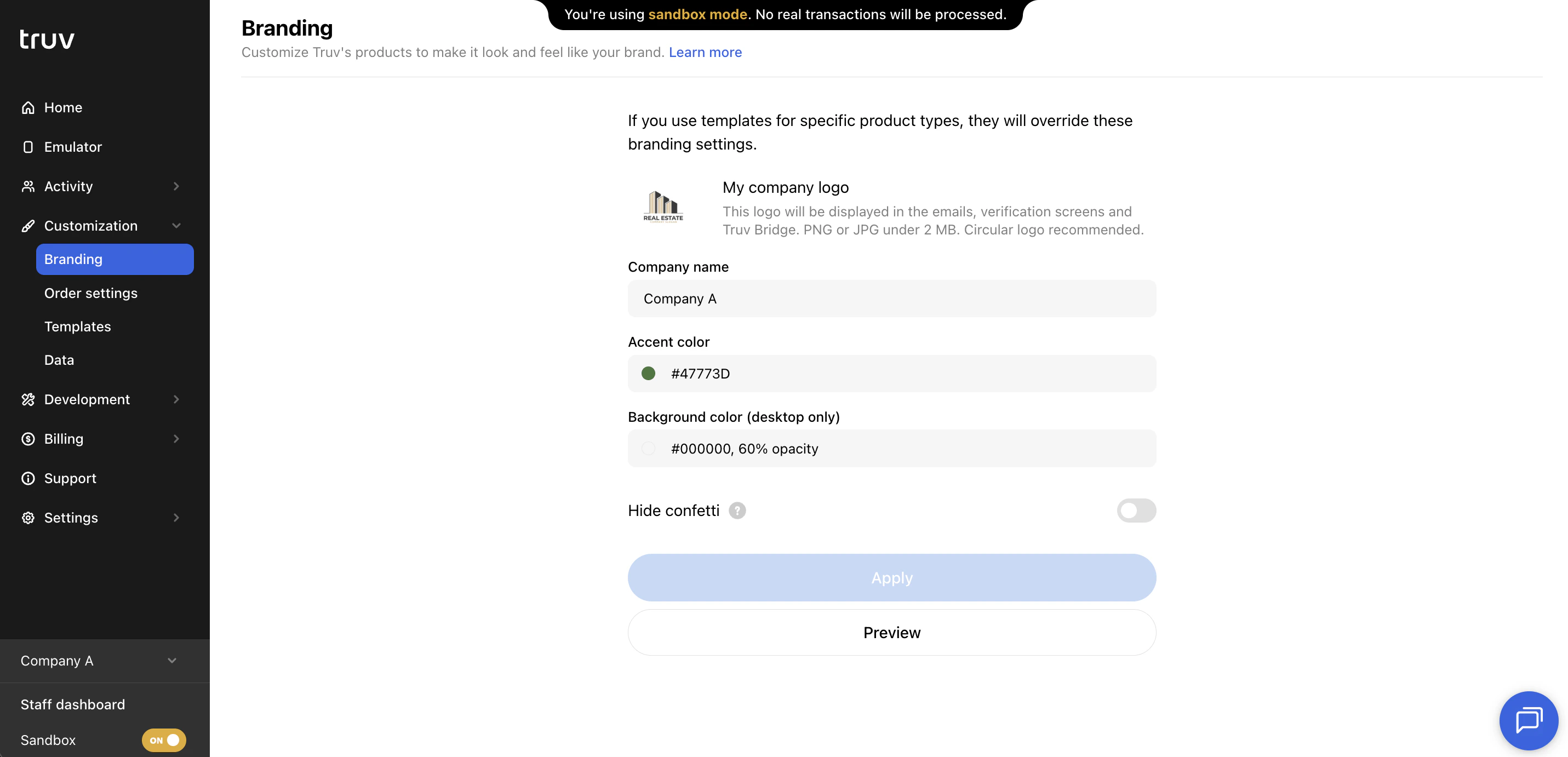
| Setting | Description |
|---|---|
| Company logo | Displayed in emails, verification screens, and Truv Bridge. PNG or JPG under 2 MB. Circular logo recommended. |
| Company name | Displayed in verification communications |
| Accent color | Primary color in the verification UI |
| Background color | Background overlay color for the verification UI (desktop only) |
| Hide confetti | Show or hide the confetti animation on successful connection |
Order Settings
Configure account-wide defaults applied to all orders unless overridden at the template level.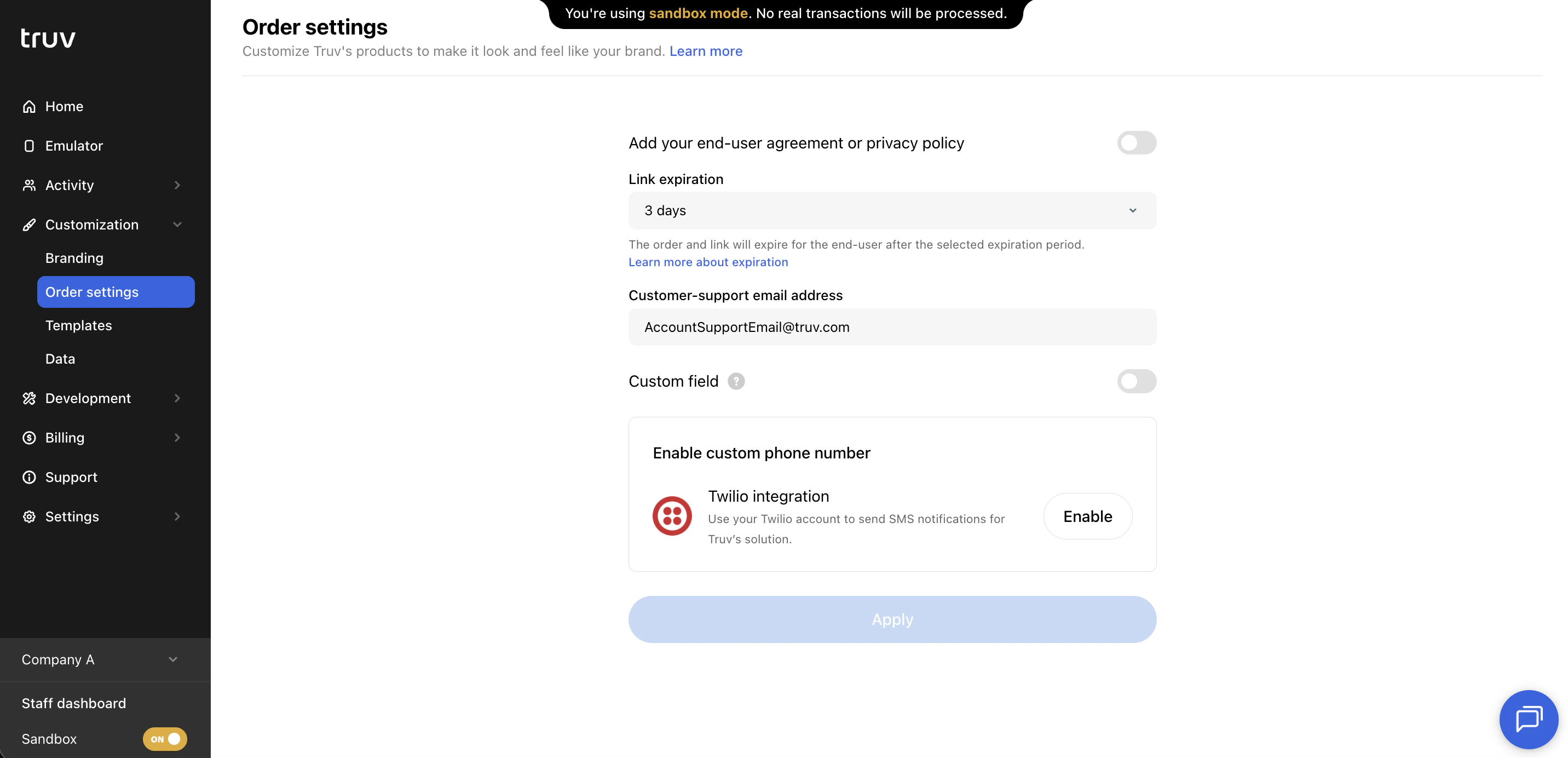
| Setting | Description |
|---|---|
| End-user agreement / privacy policy | Toggle on to add a URL to all verification experiences |
| Link expiration | How long verification links stay active before expiring (e.g. 3 days) |
| Customer support email | Support email address shown to end users during verification |
| Custom field | Enforces a required custom data field (e.g. loan number) on all orders |
| Custom phone number | Send SMS notifications from a specific authenticated phone number via Twilio integration |
Templates
Create and manage templates to apply distinct customizations to individual workflows or clients.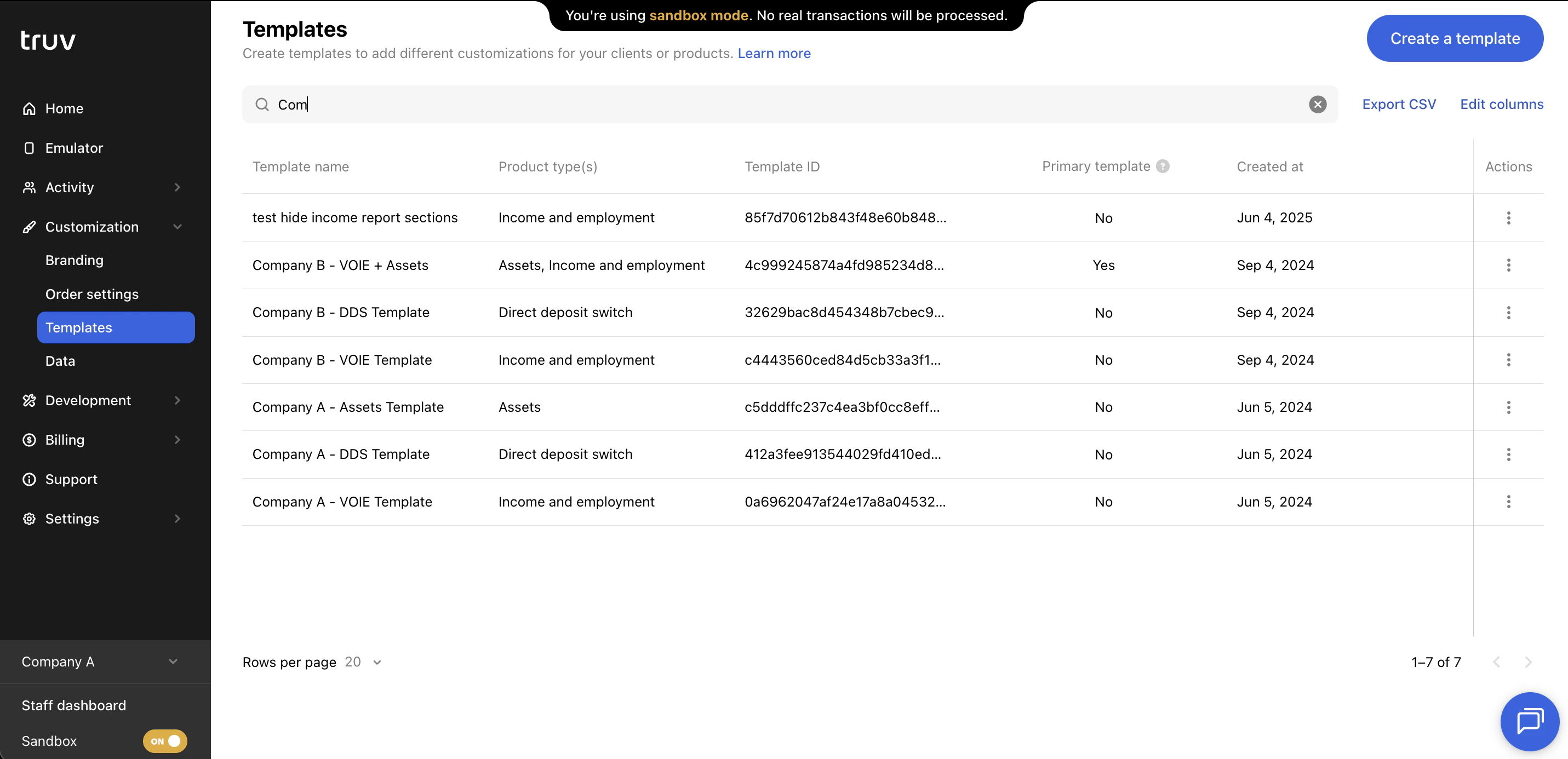
Data
Control which fields are included in API responses for each product type.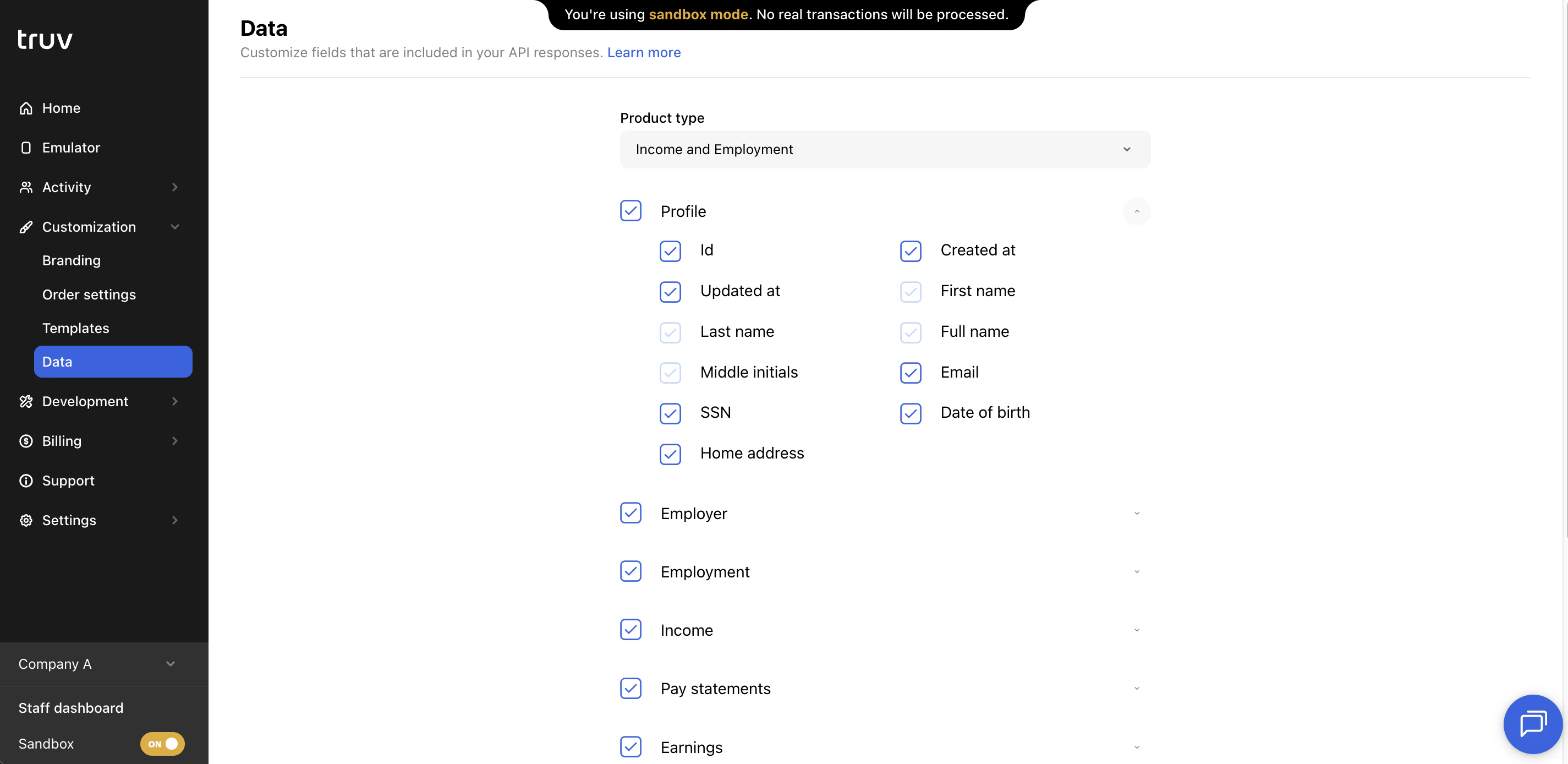
Next steps
Templates guide
Full template configuration reference
UX Customization
Full configuration reference for templates