

Dashboard sections
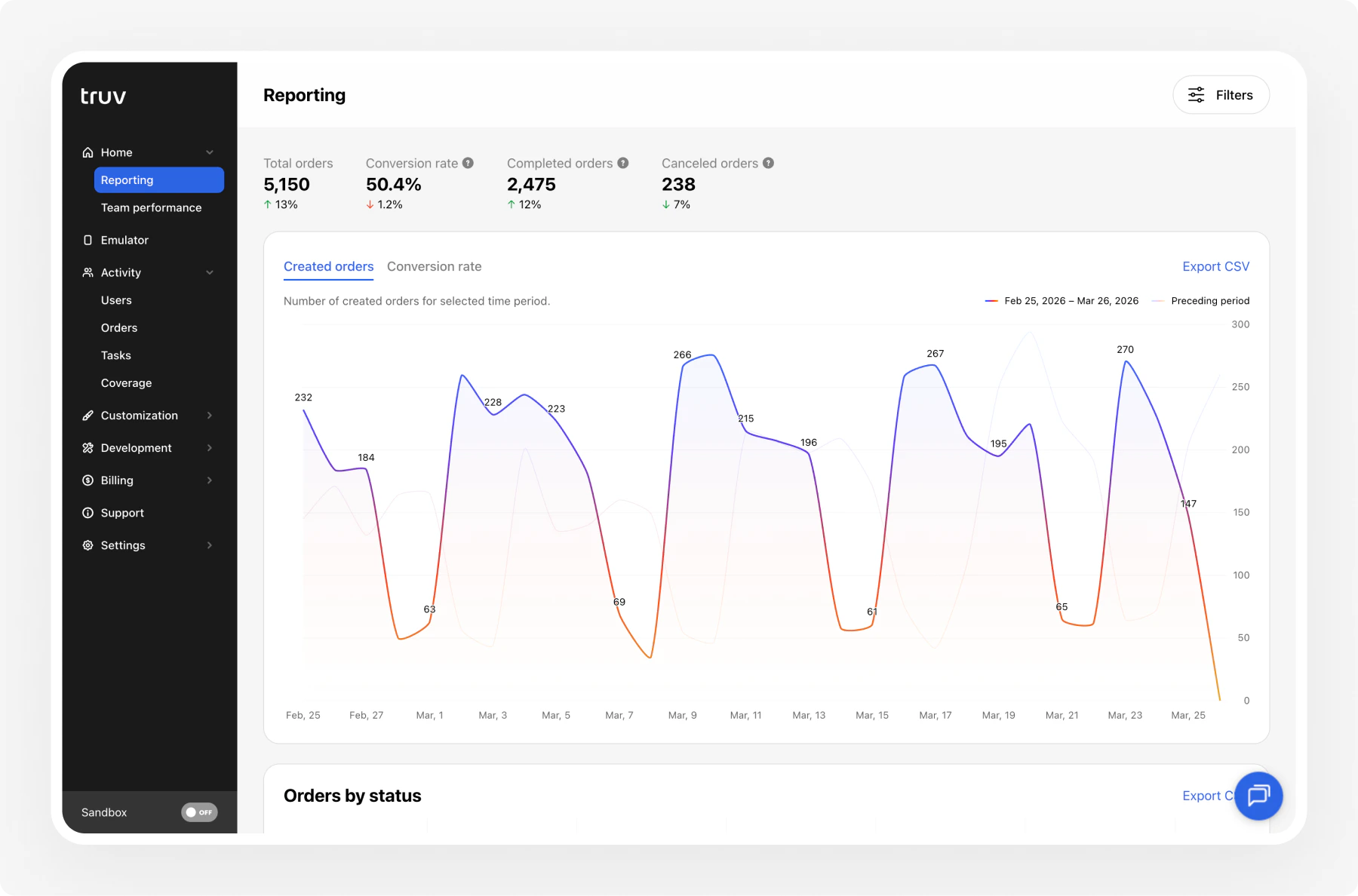
Home
View order summaries filtered by environment, add team members, access reporting, and see a snapshot of verification activity.
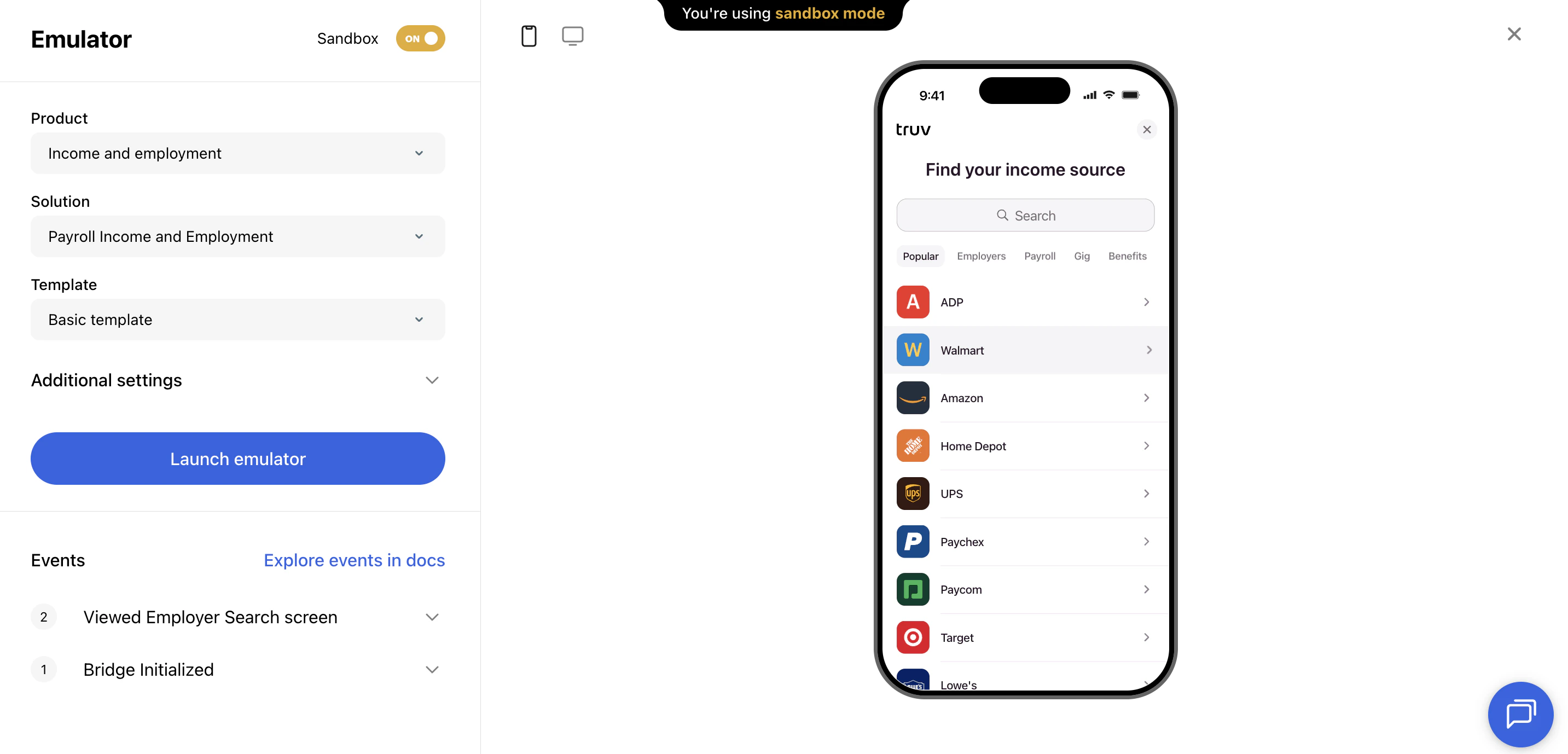
Emulator
Simulate the Truv Bridge flow with pre-configured values. Test different product types, preview the user experience, and view real-time event logs with full JSON details.
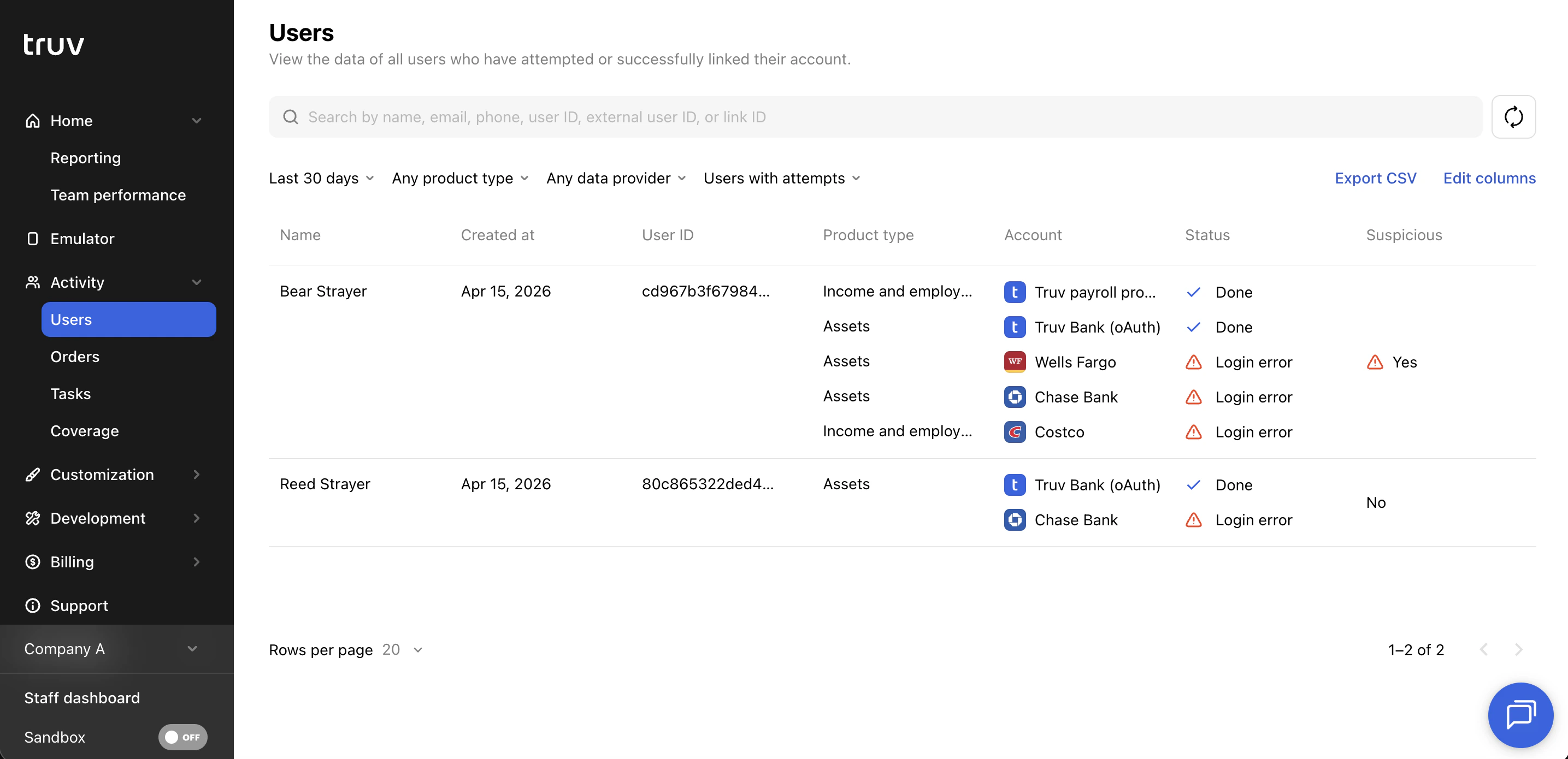
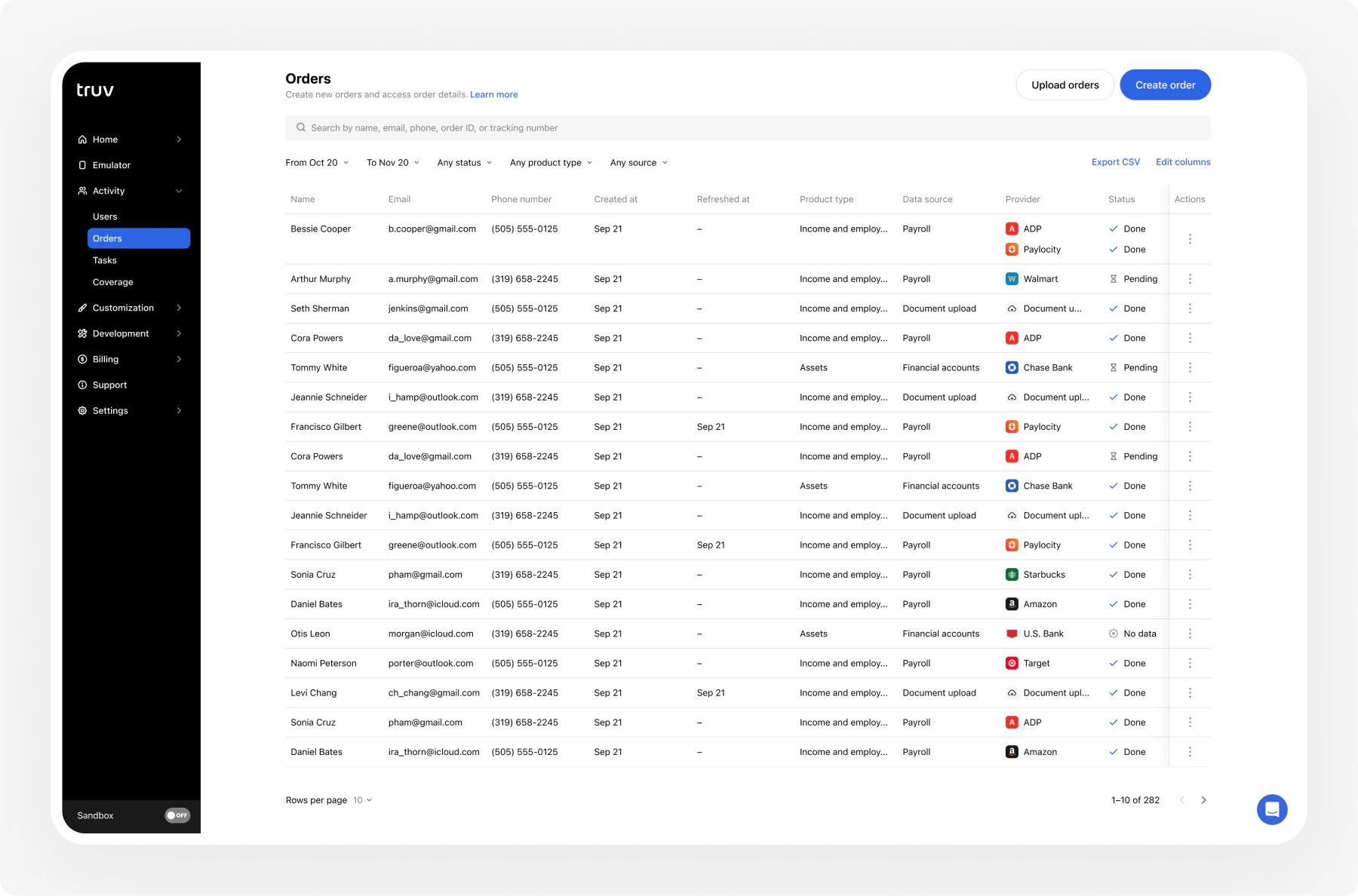
Activity
Search and filter across three tabs: Users (end-user information), Orders (create and manage orders), and Tasks (historical data retrieval details).
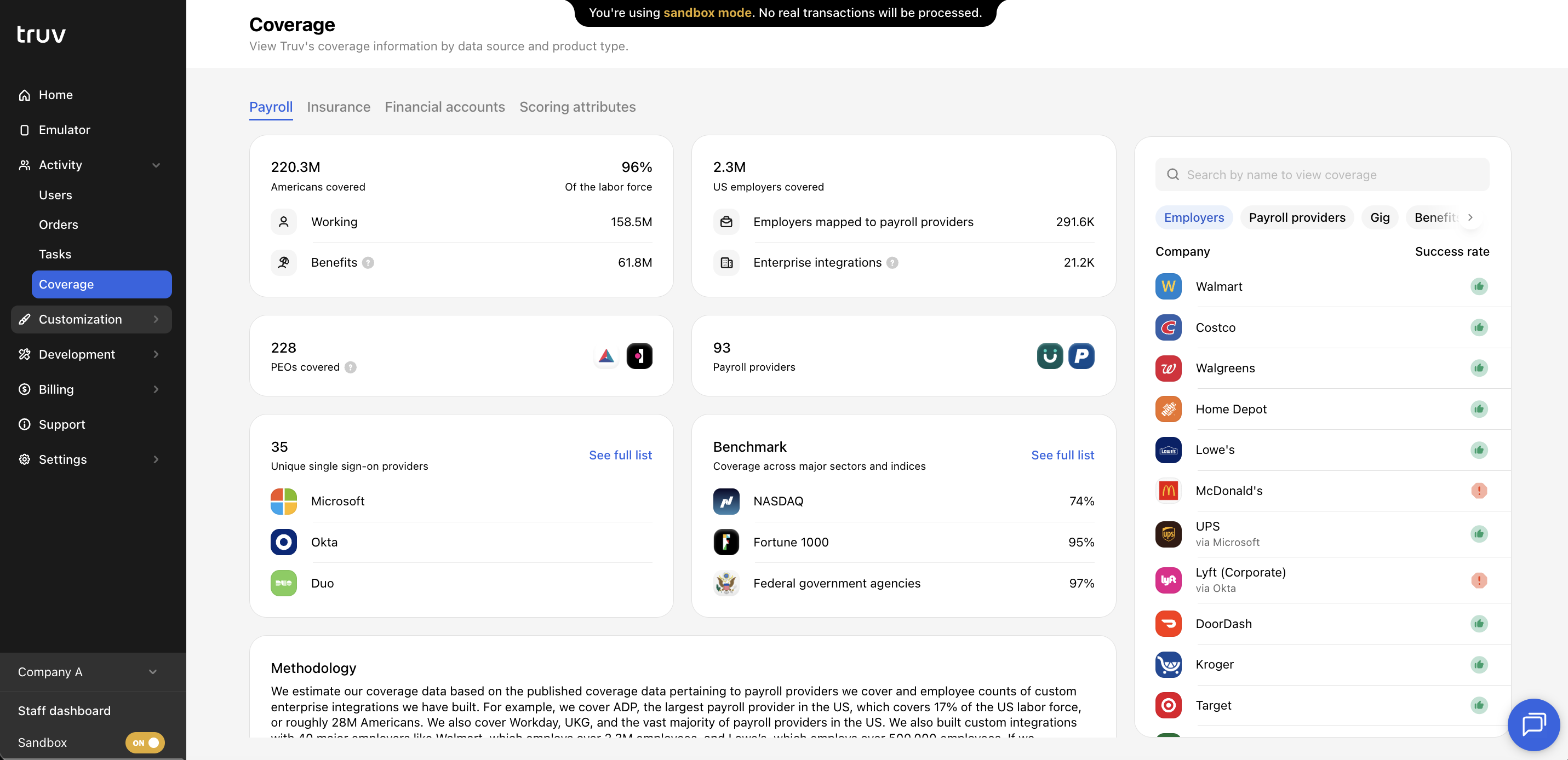
Coverage
View Truv’s data source coverage statistics: population reach and supported payroll provider and bank integrations.
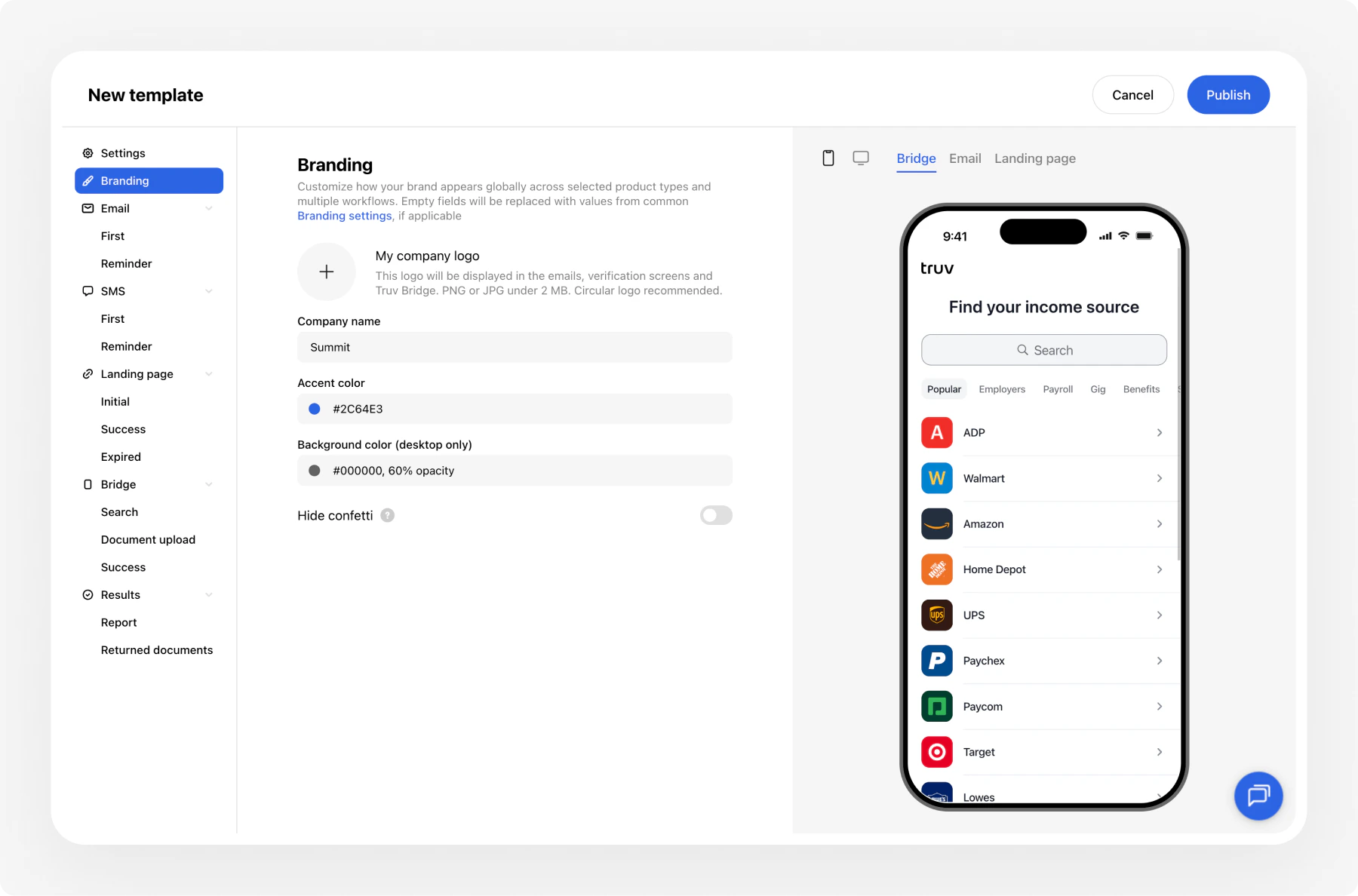
Customization
Create and manage customization templates to brand Bridge, emails, SMS messages, and landing pages. Configure data field selections per product type.
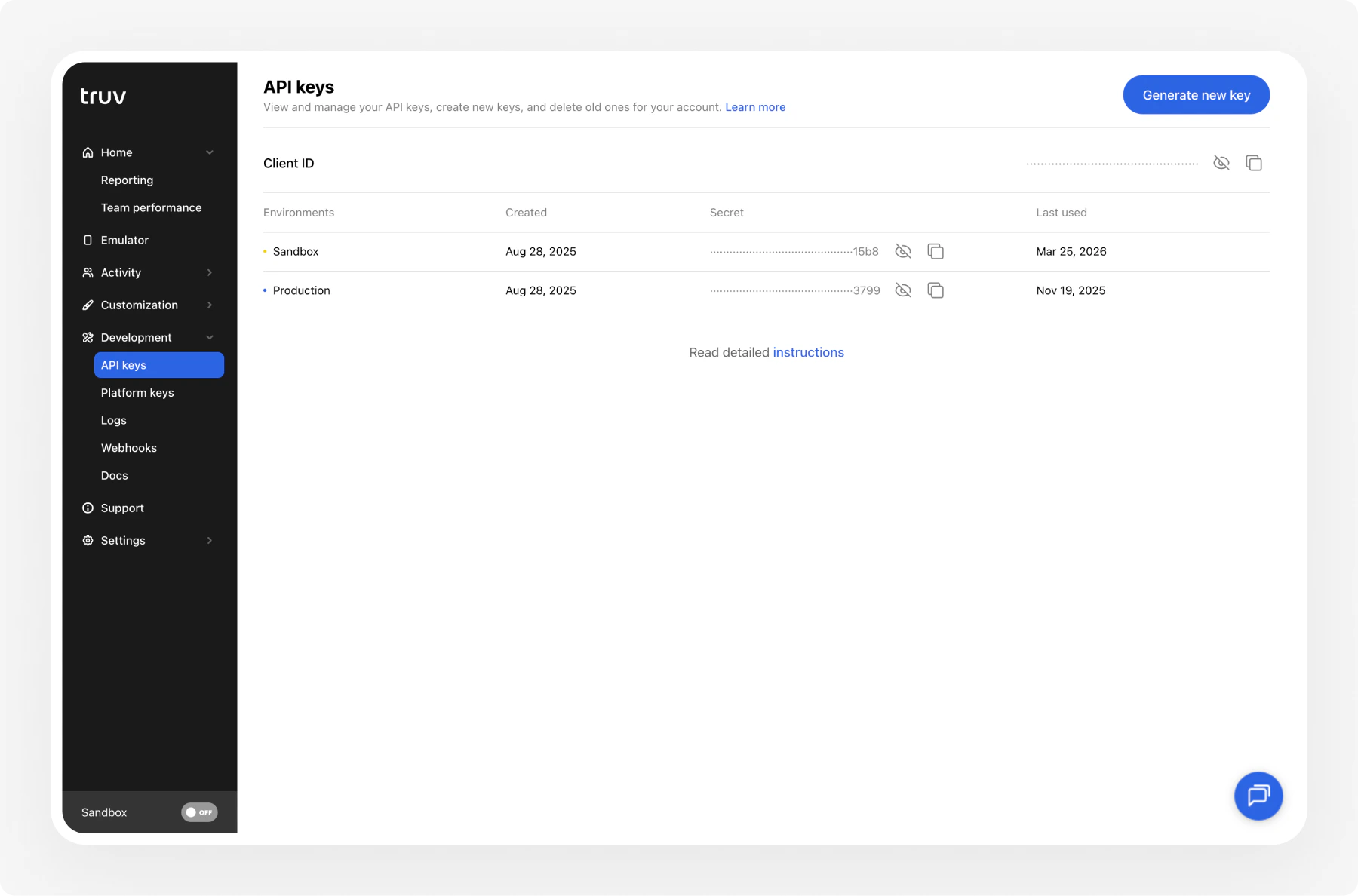
Development
Manage API keys (Client ID and Access secret), view API event logs, and configure webhook endpoints and notification settings.
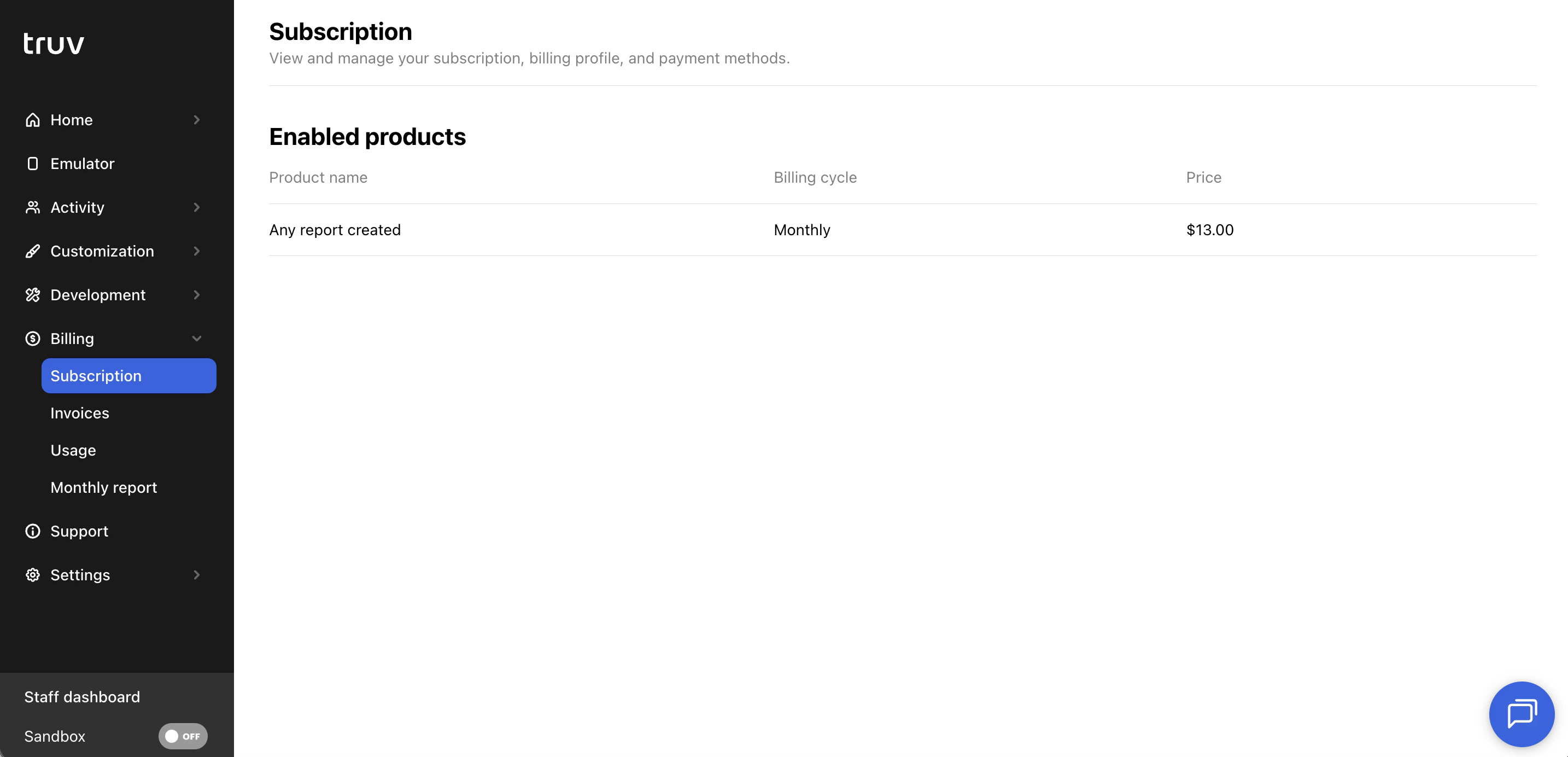
Billing
View your subscription, invoices, usage breakdown, and download monthly usage reports.
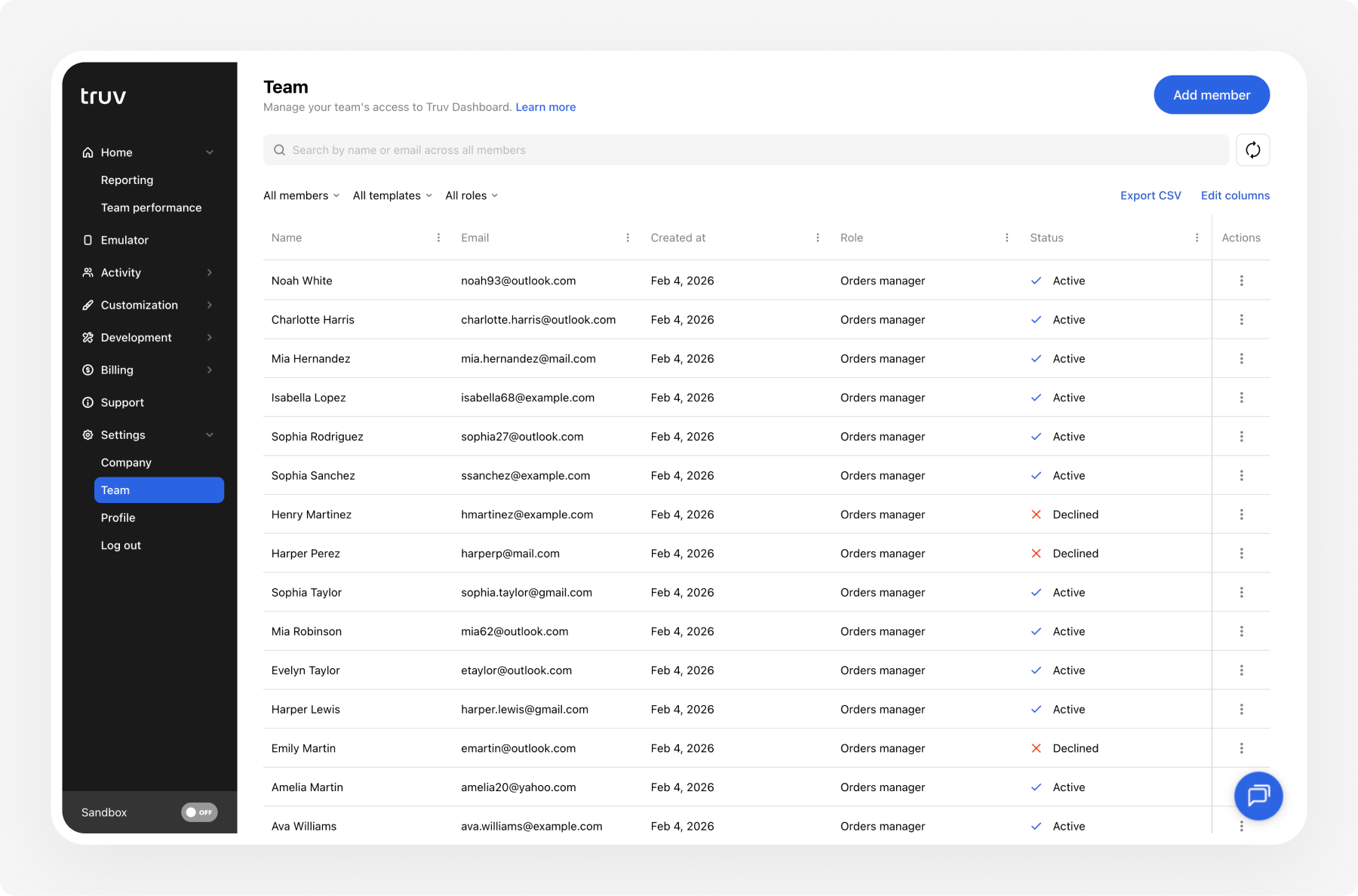
Settings
Team management, single sign-on (SSO) configuration, multi-tenancy company switching, and account-level settings like order expiration windows.
Environments
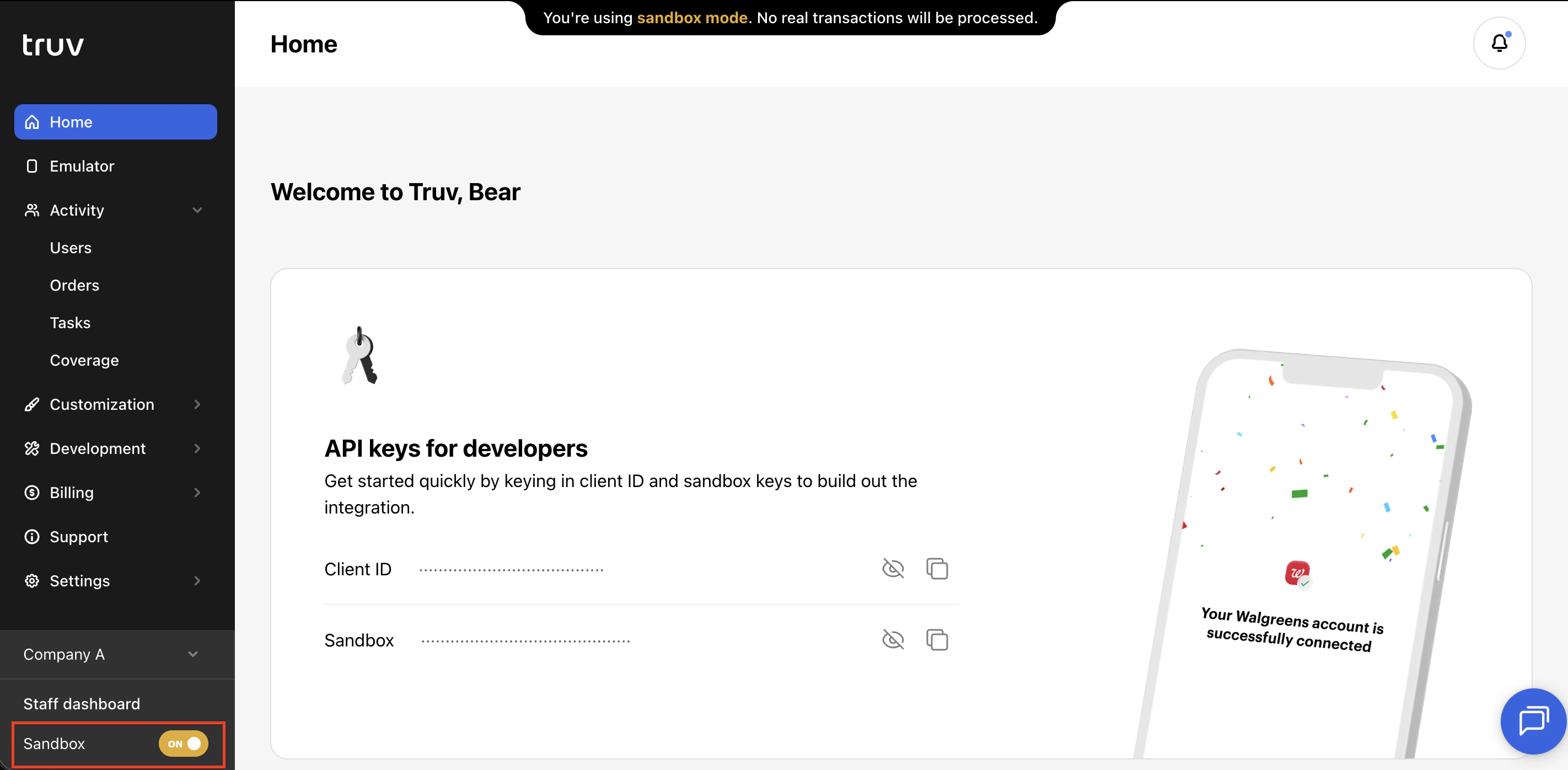
The Dashboard supports two environments. Owners and Administrators have access to toggle Sandbox mode On or Off.| Environment | Purpose |
|---|---|
| Sandbox | Test with simulated data and test credentials. No real provider connections. |
| Production | Live environment with real user data and production API keys. |
When Sandbox mode is enabled in your Dashboard, it is enabled for all users. Once testing is complete, ensure that you have switched Sandbox mode off.
Team roles and permissions
The Dashboard supports five roles with granular access control:| Access | Owner | Administrator | Developer | Orders Manager | Billing Manager |
|---|---|---|---|---|---|
| Reporting | Yes | Yes | Yes | Yes | Yes |
| Orders / Users | Yes | Yes | Yes | Yes | No |
| Tasks | Yes | Yes | Yes | Yes | No |
| Development | Yes | Yes | Yes | No | No |
| Customization | Yes | Yes | Yes | No | No |
| Customization Templates | Yes | Yes | Yes | No | No |
| Company settings | Yes | Yes | Yes | No | No |
| Team | Yes | Yes | No | No | No |
| Billing | Yes | Yes | No | No | Yes |
| Usage | Yes | Yes | No | No | Yes |
| Support tickets | Yes | Yes | Yes | Yes | Yes |
| Can be deleted | No | Yes | Yes | Yes | Yes |
Every company must have at least one Owner. In a multi-tenancy setup, members can have different roles in each company.
Manage Team Members
Navigate to Settings > Team > Add member and provide the member’s name, email, role, and available order templates. To edit a team member’s role or access, find the user in the Team Members table, click their row, and change any settings.Restrict access by template
Truv supports controlling Order Manager access through Template assignment. If an Order Manager is assigned specific templates, they will only be able to create orders using those templates and see orders that were created using those templates. This is convenient if team members belong to specific branches or regions and need to create orders with that branding and only see orders for their team.Get started
Create and complete a sandbox order
Test the full verification flow using sandbox credentials before going live.
Create and complete a production order
Switch Sandbox mode off and run a real verification with production API keys.
Review Truv templates
Explore Customization > Templates to configure the verification experience for each workflow.
Go live in Truv Dashboard
Confirm production settings, ensure Sandbox mode is off, and begin processing real verifications.